
A few years ago, if you’d told a data scientist that the best training data for their model might not come from real people at all, they’d have looked at you sideways.
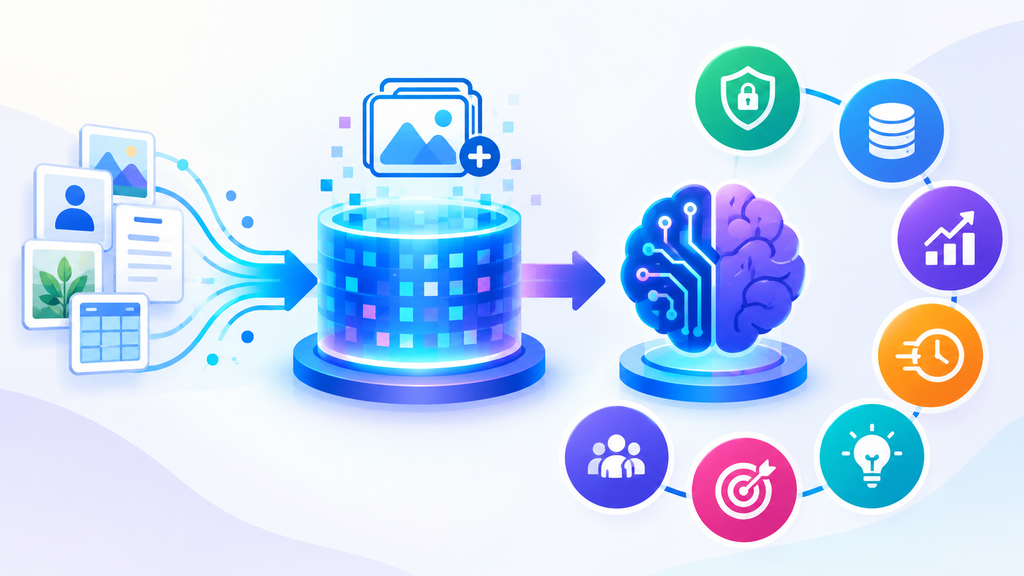
Real data was the gold standard. It was messy, sure, but it was real. Today, that assumption is being quietly dismantled inside labs at OpenAI, Google DeepMind, Meta, and a hundred smaller startups you’ve probably never heard of. The reason comes down to one uncomfortable truth: the internet is running out of usable human data, and what’s left is often too biased, too dirty, or too legally risky to use safely.
This is where synthetic data generation enters the picture, and honestly, it’s one of the more fascinating shifts happening in artificial intelligence right now. It’s not a niche technical curiosity anymore. It’s becoming the backbone of how modern AI systems learn. If you’ve used a chatbot, a fraud detection tool, a medical imaging app, or even a self-driving car demo in the last two years, there’s a good chance played some role in training the model behind it.
In this article, we’re going to unpack what synthetic data generation actually means, why it’s exploding in popularity, how it works under the hood, where it shines, where it falls flat, and what it means for the future of AI development. No jargon soup, no hand-waving. Just a clear, honest look at one of the most important trends reshaping machine learning today.
Table of Contents
- What Is Synthetic Data Generation, Really?
- Why the World Suddenly Needs Synthetic Data
- How Synthetic Data Generation Actually Works
- Types of Synthetic Data You Should Know About
- Real-World Applications Already Using Synthetic Data
- The Advantages That Make Synthetic Data So Appealing
- The Risks Nobody Talks About Enough
- Synthetic Data vs Traditional Training Data
- How Companies Are Building Synthetic Data Pipelines
- What the Future Looks Like
- Practical Advice for Teams Considering Synthetic Data
- Frequently Asked Questions
- Final Thoughts
What Is Synthetic Data Generation, Really?
Let’s start simple. Synthetic data generation is the process of creating artificial datasets that mimic the statistical properties, structure, and patterns of real-world data, without actually containing any real, observed events or people. Think of it like a highly detailed simulation of reality, one that’s built from scratch using algorithms, statistical models, or other AI systems rather than collected from actual human behavior.
Here’s an easy way to picture it. Imagine a bank wants to train a fraud detection model. Real fraud cases are rare, which is good news for customers but bad news for model training, since machine learning models need thousands of examples to learn patterns reliably. Instead of waiting years to accumulate enough real fraud cases, a team can use to create thousands of realistic, statistically accurate fraud scenarios that never actually happened to a real customer, but behave exactly like ones that could.
That’s the essence of it. Fake, in the sense that it didn’t come from a real event. Real, in the sense that it behaves and looks just like data that did.
It’s worth noting that synthetic data generation isn’t a brand-new invention. Statisticians have used simulated data for decades in fields like actuarial science and clinical trials. What’s changed is the scale and sophistication. Modern now leverages deep learning models, including generative adversarial networks (GANs), diffusion models, and large language models, to produce data that’s almost indistinguishable from the real thing.
Why the World Suddenly Needs Synthetic Data
You might be wondering why this matters so much right now, in 2026, when it’s barely made headlines outside of AI research circles. There are a few converging pressures pushing synthetic data generation from a nice-to-have into a necessity.
The internet is running dry
Large language models were trained on massive scrapes of the public internet. Books, articles, forums, code repositories, all of it. But researchers at places like Epoch AI have pointed out that the supply of high-quality, publicly available text is finite, and frontier labs are approaching the edge of what’s usable. Once you’ve scraped Wikipedia, Reddit, GitHub, and every accessible book archive, there isn’t much left. This scarcity is one of the biggest drivers behind the rise of synthetic data generation as an alternative training source.
Privacy laws are tightening everywhere
Between GDPR in the UK and EU, HIPAA in the US healthcare sector, and a growing patchwork of state-level privacy laws across America, collecting and using real personal data has become a legal minefield. Companies that once freely scraped user data now face lawsuits, fines, and reputational damage for doing so. Synthetic data generation offers a workaround, because if the data was never tied to a real person in the first place, many of these legal risks simply don’t apply in the same way.
Rare events need more examples than reality provides
Some of the most important things AI needs to learn are, by nature, rare. Airplane engine failures. Cancerous tumors in early stages. Extreme weather events. Car crashes involving pedestrians. Waiting for enough real-world examples of these events to train a reliable model could take decades, and in some cases, people would get hurt in the meantime. Synthetic data generation lets researchers manufacture thousands of realistic variations of these rare scenarios so models can learn to recognize them before they happen in the real world.
Bias in real datasets is a persistent problem
Real-world data inherits every flaw of the society that produced it. If a hiring dataset historically favored one demographic, a model trained on it will likely repeat that pattern. With synthetic data generation, engineers can intentionally balance datasets, filling gaps and correcting skewed representation in ways that would be nearly impossible with organically collected data alone.
How Synthetic Data Generation Actually Works
Now let’s get into the mechanics, because this is where things get genuinely interesting.
At a high level, synthetic data generation relies on models that have learned the underlying patterns, distributions, and relationships within real datasets, and can then produce new samples that follow those same patterns without duplicating any specific original data point.
Generative Adversarial Networks (GANs)
GANs work through a kind of internal competition. One neural network, the generator, tries to create fake data. A second network, the discriminator, tries to tell the difference between real and fake samples. They train against each other repeatedly, with the generator getting better and better at fooling the discriminator, until the fake data becomes remarkably convincing. This approach has been widely used in image-based synthetic data generation, producing everything from realistic faces to medical scan variations.
Diffusion Models
Diffusion models take a different route. They learn to gradually add noise to real data and then reverse that process, essentially learning how to “denoise” random static back into something structured and meaningful. This technique now powers a lot of image and video-based synthetic data generation, and it’s part of what makes tools like Midjourney and Stable Diffusion so capable.
Large Language Model Bootstrapping
This is where things get especially relevant to the current AI boom. Companies are now using powerful language models to generate new training text for training the next generation of language models. A strong model writes synthetic essays, dialogues, code samples, or reasoning chains, and these outputs become training material for smaller or future models. This self-improving loop has become one of the most talked-about methods of synthetic data generation in the large language model space, and it’s part of how models like Microsoft’s Phi series were trained on smaller, denser, more curated datasets rather than raw internet scrapes.
Agent-Based Simulation
For structured, tabular, or behavioral data, teams often build simulations populated by artificial agents that behave according to statistically grounded rules. Think of simulating thousands of virtual shoppers browsing an online store, each making decisions based on probability distributions drawn from real shopping behavior. The result is a dataset that reflects human tendencies without containing a single actual shopper’s information.
Rule-Based and Statistical Methods
Not every method needs deep learning. Sometimes synthetic data generation relies on simpler statistical techniques, like sampling from known distributions, applying noise to real records, or using algorithms like SMOTE to generate new data points near existing ones in a dataset. These methods are often used in smaller-scale business applications where a full generative model would be overkill.
Types of Synthetic Data You Should Know About
Not all synthetic data looks the same, and understanding the different categories helps clarify where synthetic data generation is being applied across industries.
Fully synthetic data is generated entirely from a model, with no direct link back to any real record. This offers the strongest privacy protection since there’s no way to trace a synthetic record back to a real individual.
Partially synthetic data blends real records with synthetic elements, often replacing only the most sensitive fields, like names, addresses, or identifiers, while keeping other statistical properties intact.
Hybrid synthetic data mixes real and artificial samples within the same dataset, which is common when teams want to preserve some ground truth while expanding coverage for rare scenarios.
Each of these approaches has different tradeoffs in terms of privacy, accuracy, and usefulness, and choosing the right one depends heavily on what the data will ultimately be used for.
Real-World Applications Already Using Synthetic Data
This isn’t theoretical anymore. Synthetic data generation is already embedded in products you’ve likely interacted with.
Healthcare and medical imaging
Hospitals and research institutions are using synthetic MRI scans, X-rays, and patient records to train diagnostic AI without exposing real patient information. This lets smaller hospitals with limited data access still build effective diagnostic tools, and it sidesteps the ethical and legal complications of sharing real medical records across institutions.
Autonomous vehicles
Companies like Waymo and Tesla rely heavily on simulated driving environments to train self-driving systems. It would be reckless, not to mention nearly impossible, to wait for enough real-world examples of rare and dangerous driving scenarios like a child running into the street or a tire blowing out on the highway. Synthetic data generation allows these companies to simulate millions of miles of driving, including edge cases that might occur only once in a real driver’s lifetime.
Financial services
Banks use synthetic transaction data to train fraud detection systems, stress-test risk models, and simulate market conditions that haven’t happened yet but plausibly could. This is particularly valuable given how tightly regulated real financial data is under laws in both the US and UK.
Retail and e-commerce
Companies simulate customer behavior to test recommendation engines, pricing algorithms, and inventory systems before rolling changes out to real customers, reducing the risk of costly mistakes.
Large language model training
As mentioned earlier, frontier AI labs are increasingly folding synthetic text into their pretraining and fine-tuning pipelines. This includes generating synthetic reasoning chains, code examples, and instructional data to sharpen a model’s capabilities in specific domains where high-quality real data is scarce.

The Advantages That Make Synthetic Data So Appealing
There’s a reason so many teams are leaning into synthetic data generation, and it goes beyond simply solving a data shortage.
It dramatically reduces privacy risk, since synthetic records aren’t tied to real individuals in a way that can be reverse-engineered under most circumstances. It’s scalable in a way real-world data collection simply isn’t, since generating a million more synthetic records costs computing power rather than months of manual collection. It allows precise control over dataset composition, letting teams balance underrepresented groups or rare events that would otherwise be nearly absent from organic data. It speeds up development cycles significantly, since teams no longer need to wait on lengthy data collection or approval processes. And it often costs a fraction of what traditional data labeling and collection would require, particularly for niche or specialized domains.
Gartner has previously projected that synthetic data would eventually overtake real data in AI model training, a projection that looked ambitious a few years ago but now feels increasingly plausible given how fast techniques have matured.
The Risks Nobody Talks About Enough
It would be dishonest to paint this as a flawless solution, because it isn’t. There are real, well-documented risks that come with leaning too heavily on synthetic data generation.
Model collapse
Perhaps the biggest concern in AI research circles right now is model collapse, a phenomenon where models trained repeatedly on synthetic data generated by previous models start to lose diversity and accuracy over successive generations. Errors compound, rare patterns get smoothed away, and the model’s outputs gradually drift from reality. Researchers at Oxford and Cambridge have published findings showing this degradation can happen surprisingly fast if synthetic data isn’t carefully mixed with real, high-quality sources.
Bias amplification
While synthetic data can correct bias, it can just as easily amplify it if the underlying generative model was trained on biased data in the first place. Garbage in, garbage out still applies, just at a larger and less visible scale.
False confidence in privacy
Synthetic data isn’t automatically anonymous just because it wasn’t directly copied from a real record. In some cases, sophisticated attacks can still extract information about individuals from the patterns embedded in synthetic datasets, particularly when the generative model has effectively memorized parts of its training data.
Quality and realism gaps
Poorly generated synthetic data can introduce artifacts, unrealistic edge cases, or subtle statistical inconsistencies that real-world data wouldn’t have. A model trained on flawed synthetic data might perform beautifully in testing and then fall apart the moment it encounters genuinely messy real-world input.
Overreliance without human oversight
There’s a temptation to treat synthetic data generation as a magic fix, letting teams skip the harder work of understanding their domain deeply. Synthetic data should complement human judgment and real-world validation, not replace it entirely.
Synthetic Data vs Traditional Training Data
It’s helpful to see these two approaches side by side rather than treating one as strictly better than the other.
Traditional data is collected from real-world events and people, which gives it an inherent authenticity that’s hard to fully replicate. It’s often expensive and slow to gather, especially for rare or sensitive scenarios, and it carries significant privacy and compliance burdens. It also tends to reflect real-world biases, for better and worse.
Synthetic data generation, by contrast, produces data quickly and at scale, with far more control over composition and balance. It reduces privacy exposure substantially, though not completely, and it can be tailored to fill specific gaps that real data can’t easily cover. The tradeoff is that it requires a high-quality source model to begin with, and it carries the risk of drifting from reality if not properly validated against real-world benchmarks.
In practice, most serious AI teams today aren’t choosing one over the other. They’re blending both, using real data as the anchor of truth and synthetic data as a tool to expand, balance, and stress-test what real data alone can’t provide.
How Companies Are Building Synthetic Data Pipelines
For teams actually implementing synthetic data generation in production, the process typically follows a fairly consistent pattern, even if the specific tools vary.
It usually starts with a small, high-quality seed dataset of real examples that captures the essential patterns and edge cases relevant to the task. From there, a generative model, whether a GAN, diffusion model, or language model, is trained or fine-tuned on that seed data to learn its underlying structure. The model then produces a much larger volume of synthetic examples, often orders of magnitude bigger than the original seed set.
Crucially, this synthetic output isn’t used blindly. Teams run validation checks, comparing statistical properties of the synthetic data against the real data to catch drift or unrealistic artifacts. Many organizations also employ a “human in the loop” review process, where domain experts spot-check samples for plausibility before the data ever reaches a training pipeline. Finally, the synthetic dataset is blended with real data, usually at a carefully tuned ratio, before being used to train or fine-tune the target model.
Companies like Gretel, Mostly AI, and Synthesis AI have built entire businesses around providing synthetic data generation as a service, offering tools that let organizations without deep in-house AI expertise still benefit from these techniques.
What the Future Looks Like
Looking ahead, it seems clear that synthetic data generation isn’t a passing trend. It’s becoming foundational infrastructure for how AI systems will be built going forward.
Frontier labs are already investing heavily in synthetic data pipelines specifically because real data scarcity is a structural problem that isn’t going away. As regulations around AI and data privacy tighten further in both the US and UK, synthetic alternatives will likely become even more attractive from a compliance standpoint. We’re also likely to see hybrid approaches mature further, with models trained on carefully curated blends of real and synthetic data becoming the industry standard rather than the exception.
There’s also growing interest in using synthetic data generation for smaller, more specialized models rather than just massive frontier systems. A hospital training a niche diagnostic tool, a small fintech building a fraud model, or a startup building a customer service bot can all benefit from generating targeted synthetic data rather than trying to compete for scarce real-world datasets.
That said, the model collapse problem will need real solutions before synthetic data can be trusted at even larger scales. Expect to see more research into detecting synthetic drift, watermarking AI-generated content, and developing better methods for blending real and synthetic sources without degrading model quality over time.
Practical Advice for Teams Considering Synthetic Data
If you’re part of a team weighing whether to invest in synthetic data generation, a few practical principles are worth keeping in mind.
Start with a strong, representative seed dataset rather than trying to generate synthetic data from a weak or biased foundation, since the generative model will inherit whatever flaws exist in that seed data. Always validate synthetic output against real-world benchmarks rather than assuming it’s accurate simply because it was algorithmically produced. Keep a healthy ratio of real to synthetic data in your training pipeline, since leaning too heavily on synthetic sources increases the risk of drift and model collapse over time. Bring in domain experts to review samples, especially for sensitive applications like healthcare or finance, where subtle inaccuracies could have real consequences. And treat as one tool among several, not a silver bullet that eliminates the need for careful data strategy altogether.
Frequently Asked Questions
What is synthetic data generation in simple terms? It’s the process of using algorithms or AI models to create artificial data that behaves statistically like real data, without being drawn directly from real events or people.
Is synthetic data as good as real data? It depends on the use case. For rare events, privacy-sensitive applications, or filling gaps in existing datasets, synthetic data can be extremely valuable. For core ground-truth accuracy, real data still generally serves as the more reliable anchor.
Does synthetic data generation eliminate privacy concerns entirely? Not entirely. While it significantly reduces privacy risk compared to using raw real-world data, poorly generated synthetic data can still leak patterns traceable back to real individuals in certain cases.
What is model collapse and how does it relate to synthetic data? Model collapse happens when AI models are trained repeatedly on synthetic data generated by earlier AI models, gradually losing diversity and accuracy across successive generations if not carefully managed with real data mixed in.
Which industries benefit most from synthetic data generation? Healthcare, finance, autonomous vehicles, retail, and large language model development are among the sectors seeing the most significant benefits right now.
Can small businesses use synthetic data generation, or is it only for big tech companies? Small businesses absolutely can benefit, especially through third-party platforms that offer synthetic data tools without requiring deep in-house machine learning expertise.
How is synthetic data generation different from data augmentation? Data augmentation typically applies small transformations to existing real data, like flipping an image or adding noise, while synthetic data generation creates entirely new data samples from a learned model of the data’s underlying patterns.
Read about 10 AI Marketing Tools For Small Business