
A hiring manager at a logistics company in Manchester once told me she spent an entire Friday afternoon reading through 340 resumés for a single warehouse supervisor role. By resumé 200, she admitted, she wasn’t really reading anymore. She was skimming for a name that sounded familiar, a school she recognized, a format that looked “professional” in whatever way her tired brain had decided meant competent that day. She caught herself rejecting a candidate because the resumé used a font she didn’t like.
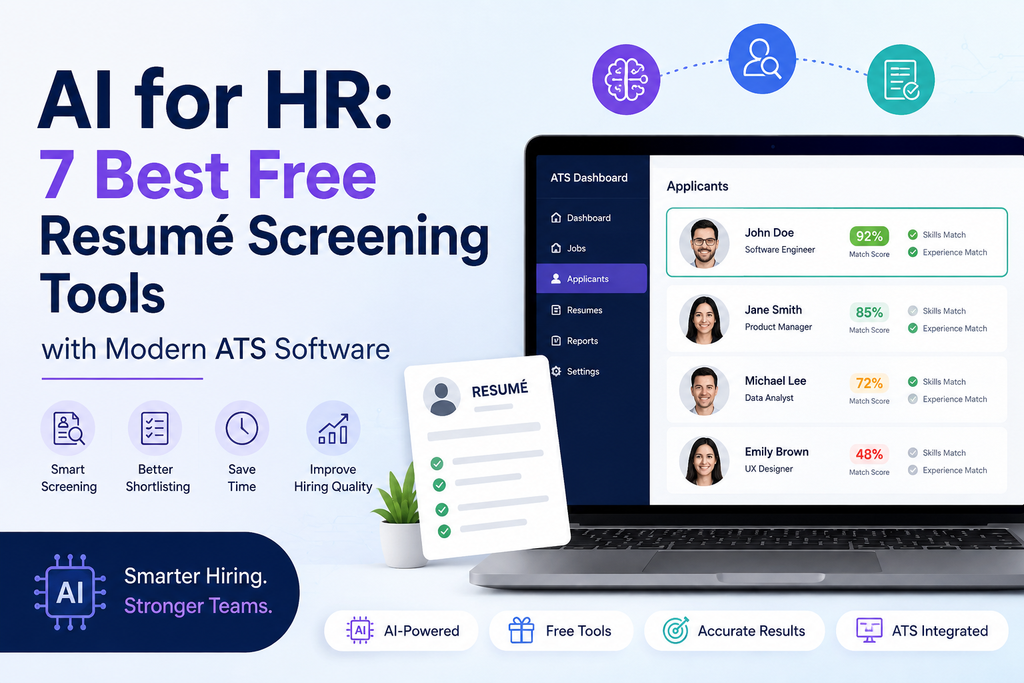
This is exactly the problem modern ATS software was built to solve, and it’s exactly why the conversation around AI resumé parser technology has moved from a nice-to-have efficiency tool to a genuine fairness intervention, when it’s built and deployed correctly. Note that last part, because it matters more than any vendor pitch will admit: this technology can reduce bias dramatically, or it can quietly encode it at scale if nobody’s paying attention to how the system was trained and configured.
This article walks through what bias-free resumé screening actually requires, how ATS software and automated talent acquisition tools work under the hood, where the real risks sit, and how HR teams in the US and UK can build screening funnels that are genuinely fairer, not just faster. We’ll cover the mechanics, a real-world scenario, the objections worth taking seriously, and a practical rollout path.
Table of Contents
- Introduction
- The Resumé Pile Problem Nobody Talks About Honestly
- What ATS Software Actually Means in 2026
- How an AI Resumé Parser Reads a Resumé Differently Than a Human Does
- Where Bias Actually Creeps Into Hiring Funnels
- Building a Bias-Free Screening Funnel: The Real Mechanics
- Automated Talent Acquisition Beyond the Resumé Stage
- A Realistic Case Study: Retail Chain, Regional Hiring Surge
- Key Features That Separate Good ATS Software From Bad
- Common Objections and Honest Answers
- Rolling Out ATS Software Without Losing Your Recruiters’ Trust
- Compliance Considerations for US and UK Employers
- The Future of Hiring Funnels
- Conclusion
- FAQ
The Resumé Pile Problem Nobody Talks About Honestly
Let’s start with a number that tends to surprise people outside recruiting: a single corporate job posting in the US or UK can attract anywhere from 150 to 500 applications within the first week, depending on the role and how visible the posting is. A recruiter juggling six open requisitions simultaneously does not have the bandwidth to give each resumé the careful, unbiased attention it deserves.
Under that kind of volume pressure, humans default to shortcuts. Research on hiring behavior has shown for decades that resumés with certain names get called back less often than identical resumés with different names attached. Educational pedigree gets weighted more heavily than actual demonstrated skill. Employment gaps get read as red flags rather than context waiting to be understood. None of this happens because recruiters are bad people. It happens because tired brains under time pressure reach for pattern-matching, and pattern-matching is where unconscious bias lives.
Old-school applicant tracking systems didn’t fix this. In fact, first-generation ATS software often made it worse, filtering resumés on rigid keyword matches that had nothing to do with actual capability, screening out qualified candidates who described their experience in slightly different language than the job posting used. That’s part of why “ATS software” earned a bad reputation among job seekers for years, reduced to a punchline about resumés vanishing into a black hole because they didn’t contain the exact right buzzword.
Modern ATS software is a genuinely different category of tool, and understanding that difference is the foundation for everything else in this article. Choosing the right ATS software, and configuring it thoughtfully, is where the real fairness gains actually come from.
What ATS Software Actually Means in 2026
Applicant tracking systems have existed since the 1990s, but what counts as ATS software today bears almost no resemblance to those early keyword-matching databases. Modern platforms combine natural language processing, structured data extraction, workflow automation, and increasingly, machine learning models trained to evaluate skills and experience contextually rather than through rigid keyword rules.
At its core, ATS software still does what it always did: it manages the flow of candidates through a hiring pipeline, from application through screening, interview scheduling, feedback collection, and offer stages. But the screening layer, the part that decides which resumés a human recruiter actually sees first, has become dramatically more sophisticated.
This is where an AI resumé parser comes in as a specific, critical component. Rather than just checking whether a resumé contains the word “Python” because the job posting said “Python,” a well-built AI resumé parser understands that “developed data pipelines using Python and pandas” demonstrates the same underlying skill, even without an exact keyword match. It reads resumés more like a thoughtful human would on their best, least-tired day, and it does that consistently, for candidate one and candidate four hundred, without fatigue changing the quality of attention given.
That consistency is the entire point, and it’s worth sitting with for a second. A human reviewer’s judgment shifts across a long day. Good ATS software doesn’t get tired. It doesn’t have a bad morning. It applies the same evaluation criteria to the last resumé in the pile as it did to the first.
How an AI Resumé Parser Reads a Resumé Differently Than a Human Does
Understanding the actual mechanics here matters, because “AI resumé parser” gets treated as a magic phrase in a lot of marketing material, and HR teams deserve a clearer picture than that.
Document structure extraction. The parser first breaks a resumé, regardless of format or layout, into structured data: work history, education, skills, certifications, dates. This sounds simple but it isn’t. Resumés come in wildly inconsistent formats, two-column layouts, creative graphic designs, PDFs exported from design tools that scramble text order. A well-built AI resumé parser handles this reliably, where earlier-generation systems frequently mangled the data entirely.
Skill and experience contextualization. Rather than literal keyword matching, modern parsing uses natural language understanding to recognize that different phrasing can describe equivalent experience. Someone who wrote “led a five-person engineering team” and someone who wrote “managed a small development team” are describing comparable leadership experience, even though the words don’t match.
Standardized scoring against role requirements. The parser evaluates extracted experience against the specific requirements of the open role, producing a structured match score rather than a binary keyword pass or fail. This is a meaningfully different approach than legacy systems, and it’s a big part of why fewer qualified candidates get incorrectly filtered out early in the funnel.
Bias-mitigation layers. This is the part that actually differentiates ethically built ATS software from the rest. Leading platforms deliberately strip or de-weight signals that correlate with protected characteristics but have no bearing on job performance, things like graduation years that reveal age, names that signal ethnicity or gender, addresses that signal socioeconomic background, or university prestige that correlates more with family wealth than actual capability.
It’s worth being direct about a real limitation here. An AI resumé parser is only as fair as the data it was trained on and the rules it was configured with. If a model was trained on historical hiring decisions that themselves reflected biased human judgment, the model can absolutely learn and replicate that bias, just faster and at greater scale. This isn’t a hypothetical risk. It’s happened publicly, and it’s exactly why the next section matters so much.
Where Bias Actually Creeps Into Hiring Funnels
Bias in hiring doesn’t usually show up as an obvious, intentional decision. It shows up in dozens of small, cumulative moments across the funnel, and understanding each one is the only way to actually design around them.
Training data bias. If historical hiring data reflects a company’s past preference, even an unconscious one, for candidates from certain schools or backgrounds, a model trained on that data without correction will learn to replicate the pattern. This is the single biggest risk in poorly implemented ATS software, and it’s the reason vendor due diligence on training methodology matters enormously.
Proxy variable bias. Even when a system is explicitly told to ignore protected characteristics like gender or race, other data points can act as proxies. Zip code can correlate with race. Certain university names can correlate with socioeconomic background. Career gaps can correlate with caregiving responsibilities that disproportionately affect women. Genuinely bias-aware ATS software actively identifies and controls for these proxy relationships rather than assuming that simply removing a name field solves the problem.
Language and phrasing bias. Candidates from different educational or cultural backgrounds often describe equivalent experience using different language conventions. A parser that only recognizes narrow, specific phrasing will systematically disadvantage candidates who write differently, even when their underlying qualifications are equal or stronger.
Human override bias. Even with excellent automated talent acquisition tools flagging a diverse, qualified slate of candidates, bias can creep right back in at the human review stage if recruiters aren’t trained on how to interpret and act on the system’s output fairly.
Building a genuinely bias-free funnel means addressing every one of these points, not just the first one. A lot of companies buy ATS software, feel good about having “AI-powered hiring,” and never actually audit whether the tool is achieving fairer outcomes in practice.
Building a Bias-Free Screening Funnel: The Real Mechanics
So what does this actually look like in practice, beyond the marketing language? A genuinely bias-conscious screening funnel built on modern ATS software includes several concrete design choices.
Blind initial screening. Names, photos, addresses, and graduation dates get stripped or masked during the first automated pass, so the initial skill match score is calculated purely on experience and qualifications, not identity signals.
Structured, skill-based scoring rubrics. Instead of a vague overall “match percentage,” strong systems break scoring into specific, job-relevant competencies, so a hiring team can see exactly why a candidate scored well or poorly, and can catch it if the scoring seems off for a specific dimension.
Regular bias audits against actual outcomes. This is the step most companies skip. It’s not enough to configure the AI resumé parser once and trust it indefinitely. Leading HR teams periodically audit whether the funnel’s advance rates differ meaningfully across gender, ethnicity, age, or other protected characteristics, and adjust the model or rules when disparities show up that aren’t explained by legitimate qualification differences.
Human-in-the-loop review at every meaningful decision point. Automated talent acquisition tools should surface a wider, fairer pool of qualified candidates to human recruiters, not make final hiring decisions unilaterally. The technology’s job is to remove the noise so human judgment, applied to a genuinely representative shortlist, can do what it does best.
Transparent candidate communication. Increasingly, candidates want to know when AI is involved in evaluating their application. Being upfront about this, and giving candidates a path to request human review, builds trust and, in some jurisdictions, is becoming a legal expectation rather than a courtesy.
Automated Talent Acquisition Beyond the Resumé Stage
It’s worth zooming out here, because bias-free screening isn’t just about the resumé stage. Automated talent acquisition, done well, touches the entire hiring funnel, and each stage carries its own fairness considerations.
Interview scheduling automation removes another quiet source of inequity: candidates who can respond to emails instantly during business hours get faster scheduling than candidates juggling a current job or caregiving responsibilities. Automated scheduling tools that offer flexible windows help level that playing field.
Structured interview question generation, informed by the same skill-based framework used in resumé screening, helps reduce the wide variability in interview quality between different hiring managers, some of whom naturally ask more probing, fair questions than others.
Automated reference checking and background verification, when built with the same bias-consciousness as the screening layer, reduces the informal, inconsistent “let me just call someone I know at their old company” approach that introduces its own network-based bias, favoring candidates whose professional networks overlap with the hiring team’s.
The throughline across all of this is consistency. Automated talent acquisition, implemented thoughtfully, replaces wildly inconsistent human judgment, which varies hire to hire, day to day, recruiter to recruiter, with a structured, auditable, and improvable process.
A Realistic Case Study: Retail Chain, Regional Hiring Surge
A US-based retail chain with locations across Texas and the Midwest faced a seasonal hiring surge, needing to fill roughly 600 store associate and shift supervisor roles within six weeks. Their existing process relied on regional HR staff manually screening resumés, and an internal audit the previous year had flagged a concerning pattern: candidates from certain zip codes were advancing to interviews at meaningfully lower rates than their application volume would predict, even when their listed qualifications were comparable.
The company implemented modern ATS software with a dedicated AI resumé parser and built-in bias auditing tools. They stripped addresses and names from the initial screening pass and structured scoring around specific, job-relevant criteria: reliability indicators from work history, relevant retail or customer service experience, and availability match.
Within the six-week hiring surge, several outcomes stood out. Time to first interview dropped from an average of nine days to three. More importantly, the zip-code disparity that had shown up in the prior year’s audit narrowed significantly, though the company was careful to note it didn’t disappear entirely, and continued monitoring it in subsequent hiring cycles rather than declaring the problem solved. The HR director was candid about this in an internal report: automated talent acquisition tools reduced bias meaningfully, but ongoing auditing remained necessary, because no single implementation is a permanent fix.
That honesty is worth highlighting, because it’s a more accurate picture of what this technology delivers than the “solved forever” framing that shows up in a lot of marketing material.
Key Features That Separate Good ATS Software From Bad
Configurable bias auditing dashboards. The platform should let HR teams actually see advance rates broken down by demographic category, not just trust that the vendor’s internal testing was sufficient.
Explainable scoring. When the AI resumé parser ranks a candidate, HR staff should be able to see exactly which qualifications drove that score, not just receive an opaque number.
Regular model retraining and bias testing disclosure. Vendors should be transparent about how often their models are retrained, what data they’re trained on, and what independent bias testing has been conducted, ideally by a third party rather than only internal validation.
Integration with existing HRIS and interview scheduling tools. Fragmented systems create fragmented data, and fragmented data makes bias auditing far harder to do accurately across the full funnel.
Candidate-facing transparency features. The ability to notify candidates that AI is involved in screening, and to offer a human review request path, matters both ethically and, increasingly, legally.
Configurable, role-specific scoring criteria. A single generic scoring model applied across radically different roles, a warehouse position versus a senior finance role, will produce weaker, less fair results than a system that allows genuinely role-specific criteria to be built. This is often the single clearest signal that separates enterprise-grade ATS software from a generic, one-size-fits-all product.
Common Objections and Honest Answers
“AI hiring tools are inherently biased, so we should avoid them entirely.” This concern is understandable given some well-publicized failures, but avoiding the technology entirely means keeping the fully manual process, which carries its own well-documented bias problems, just less visibly measured. The honest answer is that thoughtfully built and audited ATS software tends to outperform unaudited human judgment on fairness, while poorly built AI tools can be worse. The differentiator is rigor, not the presence of AI itself.
“Candidates will feel dehumanized by AI screening.” This is a fair concern and a real risk if handled poorly. The solution isn’t avoiding automation, it’s transparency: telling candidates AI is involved, explaining what it evaluates, and providing a clear path to human review if they want one.
“We don’t have the technical expertise to audit an AI resumé parser properly.” Most reputable vendors provide bias auditing dashboards and reporting specifically so HR teams don’t need data science expertise in-house to monitor outcomes. If a vendor can’t provide this in an accessible way, that’s a legitimate reason to look elsewhere.
“This will slow down our hiring process while we set it up properly.” There’s a genuine short-term setup cost, building role-specific scoring criteria, configuring bias controls, training the team. But the medium-term speed and fairness gains consistently outweigh that upfront investment, based on how most successful implementations play out.
Rolling Out ATS Software Without Losing Your Recruiters’ Trust
Technology rollouts fail more often from poor change management than poor technology, and that’s especially true here, because recruiters can feel like the tool is judging their own past decisions.
Start by involving recruiters directly in configuring the scoring criteria for their specific roles. Their domain expertise about what actually predicts success in a given position is essential input, not something the software should override entirely.
Run the new automated talent acquisition system in parallel with the existing manual process for a defined pilot period, comparing which candidates each approach surfaces and discussing the differences openly as a team, rather than assuming the automated result is automatically correct.
Train recruiters explicitly on interpreting the AI resumé parser’s output, what the scores mean, what they don’t mean, and where human judgment should still weigh in, particularly for nuanced situations the system might not capture well, like a career change that shows genuine transferable skill despite an unconventional resumé.
Set up a regular cadence, monthly at minimum during the first two quarters, for reviewing bias audit data as a team, treating any disparities that show up as a shared problem to solve rather than a hidden metric nobody looks at until it becomes a legal issue.
Compliance Considerations for US and UK Employers
Employers in both the US and UK need to think about this technology through a compliance lens, not just an efficiency lens, and the regulatory landscape is evolving quickly on both sides of the Atlantic.
In the US, various state and local laws increasingly require disclosure when AI tools are used in hiring decisions, and some jurisdictions mandate independent bias audits of automated employment decision tools on a recurring basis. Federal guidance from employment regulators has also made clear that using an AI resumé parser doesn’t shield an employer from liability if the tool produces discriminatory outcomes, the legal responsibility for fair hiring still sits with the employer.
In the UK, equality law imposes similar obligations, and the Information Commissioner’s Office has issued guidance on the use of automated decision-making tools in employment contexts, particularly around transparency and candidates’ rights regarding automated processing of their personal data.
The practical takeaway for HR teams on both sides of the Atlantic: vendor selection needs to include a genuine compliance review, not just a features comparison. Ask vendors directly what regulations their ATS software has been built to support, request documentation of bias testing, and involve legal counsel in reviewing vendor contracts before rollout, particularly around data handling and liability terms. No ATS software vendor should be exempt from that level of scrutiny, regardless of how polished the sales deck looks.
The Future of Hiring Funnels
The direction of travel here is fairly clear. Automated talent acquisition tools are becoming standard infrastructure in corporate HR the same way applicant tracking systems themselves became standard two decades ago. The differentiator going forward won’t be whether a company uses ATS software, most will, it’ll be whether that software was selected and configured with genuine fairness rigor, or adopted purely for speed with fairness treated as an afterthought.
Regulatory pressure in both the US and UK will likely continue tightening around transparency and bias auditing requirements, which is a good thing for candidates and, frankly, a good thing for companies too, since discriminatory hiring practices carry real legal and reputational risk that thoughtful ATS software implementation directly reduces. The companies that treat their ATS software as a living system, not a one-time purchase, will be the ones best positioned as those requirements evolve.
The HR teams getting ahead of this aren’t the ones with the flashiest AI resumé parser demo. They’re the ones treating bias auditing as an ongoing operational discipline, not a one-time setup checkbox, and building genuine partnership between recruiters and the automated systems supporting them.
The hiring manager in Manchester, skimming resumé 200 on a Friday afternoon, wasn’t failing because she lacked good intentions. She was failing because the volume of the task had outpaced what careful human attention can sustainably deliver, and bias quietly filled that gap the way it always does under pressure.
That’s the real promise of well-built ATS software: not replacing human judgment, but protecting it, by handling the volume consistently and fairly so recruiters can apply their expertise where it actually matters, to a genuinely representative shortlist of qualified candidates. An AI resumé parser built and audited with real rigor doesn’t just move faster than a tired human at 4 PM on a Friday. It moves more fairly too, and it does that consistently, for candidate one and candidate four hundred alike.
If there’s one action step worth taking from this, it’s this: don’t just ask whether your ATS software is fast. Ask whether anyone on your team is actually looking at the advance-rate data across demographic groups on a regular basis. That single habit, ongoing auditing rather than one-time setup, is what separates hiring funnels that are genuinely bias-free from ones that just look that way on a vendor’s sales slide.
FAQ
Does an AI resumé parser eliminate bias completely? No single tool eliminates bias completely. A well-built AI resumé parser, combined with regular bias auditing, meaningfully reduces bias compared to unaudited manual review, but ongoing monitoring is still necessary, not optional.
Will candidates know if ATS software is screening their resumé with AI? Increasingly, yes, and often legally required to know, depending on jurisdiction. Transparent employers disclose this directly and offer a path for candidates to request human review.
How often should a company audit its ATS software for bias? Most HR compliance experts recommend quarterly reviews at minimum, with a full independent audit at least annually, particularly given how quickly regulations in this space are evolving in both the US and UK.
Can small businesses benefit from automated talent acquisition, or is it only useful at scale? Even small businesses hiring in smaller volumes benefit from the consistency and structured scoring modern ATS software provides, though the relative time savings tend to be more dramatic for high-volume hiring.
What’s the single biggest mistake companies make when implementing this technology? Treating vendor bias claims at face value without requesting independent audit documentation, and failing to conduct their own ongoing outcome audits after implementation.
Does using ATS software reduce legal liability for discriminatory hiring? Not automatically. Employers remain legally responsible for fair hiring outcomes regardless of the tools used, which is exactly why compliance-focused vendor selection and ongoing auditing matter so much.
Read About AI Customer Service Chatbots