
A friend who runs a mid-sized skincare brand told me about the week her best-selling moisturizer disappeared from her warehouse shelves entirely, right in the middle of a marketing push she’d spent months planning. The ads were live. The influencer posts were scheduled. The demand was real and growing fast. And her inventory system, a spreadsheet updated manually every few days by someone juggling six other responsibilities, simply hadn’t caught the trend in time. By the time she noticed the numbers looked off, she was already six weeks out from her next restock, watching customers land on a product page that just said “sold out” while her competitors quietly absorbed every single one of those sales.
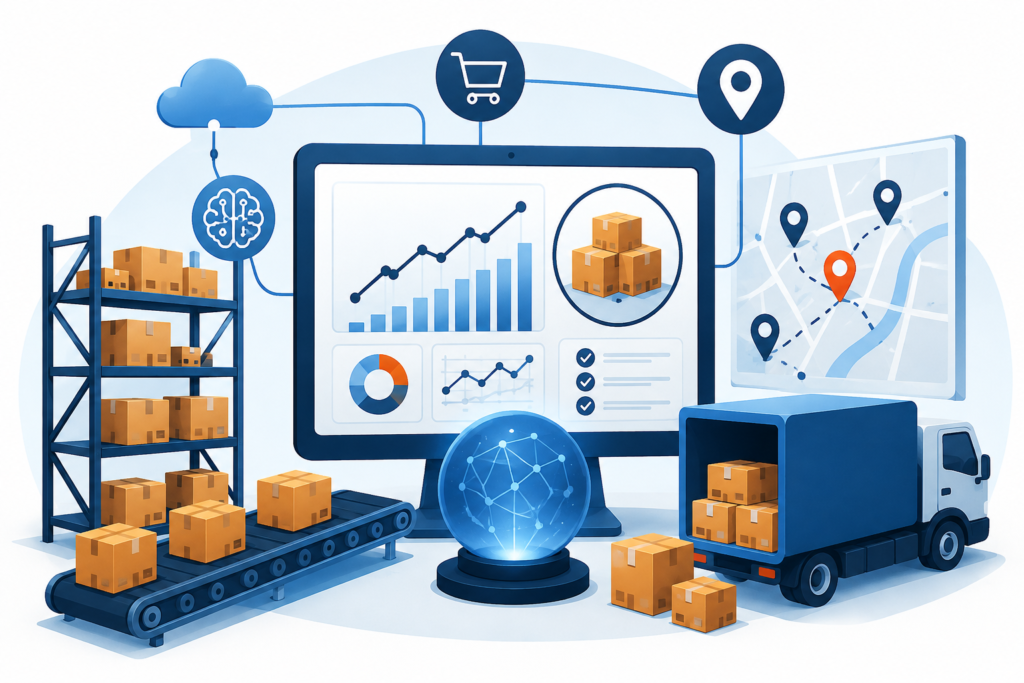
That story isn’t unusual. It’s the default experience for a huge number of e-commerce businesses still running supply chains on gut instinct, historical averages, and reactive reordering. Somebody notices stock is low, places an order, and hopes the timing works out. Sometimes it does. Often it doesn’t, and the gap between “noticing a problem” and “actually fixing it” is exactly where stockouts, and the lost revenue that comes with them, tend to live.
This is precisely the problem predictive logistics AI was built to solve, and it’s becoming less of a competitive advantage reserved for retail giants and more of a baseline expectation for any e-commerce operation serious about staying in stock. Supply chain automation isn’t about replacing the people who run your operations. It’s about giving them a system that actually sees problems coming, instead of one that only tells you about them after your customers already have.
This piece breaks down exactly how predictive logistics AI works, why traditional inventory management keeps failing e-commerce businesses even when the people running it are genuinely competent, what supply chain automation actually looks like once it’s implemented properly, and how businesses in the US and UK are using these tools to keep shelves stocked without drowning their teams in manual spreadsheet work.
Table of Contents
- Why Traditional Inventory Management Keeps Falling Short
- What Predictive Logistics AI Actually Does
- The Real Cost of a Stockout, Beyond the Obvious
- How Supply Chain Automation Actually Works Under the Hood
- Demand Forecasting: The Engine Behind Predictive Logistics
- Real-World Applications Across Different E-commerce Categories
- Supplier and Lead Time Management Through Automation
- Warehouse and Fulfillment Integration
- What Implementation Actually Looks Like
- Common Mistakes Businesses Make When Adopting This Technology
- Measuring Whether Predictive Logistics Is Actually Working
- Where Supply Chain Automation Is Headed Next
- Conclusion: Stop Reacting to Stockouts and Start Preventing Them
- FAQ: Common Questions About Predictive Logistics and Supply Chain Automation
Why Traditional Inventory Management Keeps Falling Short
Most e-commerce businesses don’t start out with sophisticated inventory systems, and honestly, they don’t need to at first. A small catalog, predictable demand, and a founder who genuinely knows their business by feel can get surprisingly far with spreadsheets and manual reordering. The problem is that this approach doesn’t scale, and it tends to break exactly when a business needs it most, right as demand starts growing unpredictably.
Traditional inventory management relies heavily on historical averages and human intuition, both of which struggle badly with anything that deviates from the recent past. A sudden viral moment, a seasonal shift that arrives earlier than usual, a competitor going out of stock and pushing their customers toward you, none of these show up cleanly in a simple average of last month’s sales. By the time a person notices the trend and manually places a reorder, the lead time on that order has often already pushed the actual restock weeks past the point where it would have prevented lost sales.
There’s also a scaling problem that catches growing businesses off guard. Managing inventory across a few dozen SKUs by hand is genuinely manageable. Managing it across several hundred, spread across multiple warehouses or fulfillment centers, with varying supplier lead times and seasonal demand patterns, becomes a task no single person or even a small team can reliably track without something breaking. This is exactly the gap predictive logistics AI and broader supply chain automation exist to close, not by replacing human judgment entirely, but by handling the volume and pattern recognition that human attention simply can’t keep up with at scale.
What Predictive Logistics AI Actually Does
At its core, predictive logistics AI analyzes historical sales data, current trends, seasonal patterns, and a range of external signals to forecast future demand with considerably more accuracy than manual estimation typically allows. Rather than reacting to low stock alerts after the fact, these systems are designed to flag potential shortages weeks or even months in advance, giving businesses enough lead time to actually act on the warning rather than simply absorbing the loss.
What sets genuine predictive logistics apart from basic inventory tracking software is the forward-looking element. A standard inventory system tells you what you currently have on hand and alerts you when it drops below a set threshold. Predictive logistics AI goes further, modeling what your stock levels are likely to look like weeks into the future based on projected demand, current supplier lead times, and any disruptions already visible in the data, then recommending specific reorder timing and quantities before a shortage actually happens rather than after.
This distinction matters enormously in practice. A basic low-stock alert firing when you’re already down to a two-week supply is far less useful if your supplier’s lead time runs six weeks, because by the time you act on that alert, you’re already looking at a month of stockout regardless of how quickly you respond. Predictive logistics AI accounts for that lead time directly in its forecasting, triggering reorder recommendations early enough that the math actually works out in your favor.
The Real Cost of a Stockout, Beyond the Obvious
It’s worth pausing on exactly what a stockout costs a business, because the immediate lost sale is often the smallest part of the damage. When a customer lands on a sold-out product page, a meaningful share of them don’t wait around for restock notifications. They simply search for the same product elsewhere, and if a competitor happens to have it in stock, that sale, and potentially that customer’s future loyalty, transfers over immediately and often permanently.
There’s a compounding effect with paid advertising too, one that catches a lot of e-commerce businesses off guard. If you’re running ads driving traffic to a product that goes out of stock mid-campaign, you’re still paying for that traffic, except now it’s landing on a dead end instead of converting, which tanks your return on ad spend and can even damage how advertising platforms score your account going forward. Search engine and marketplace rankings take a hit too, since platforms like Amazon and Google Shopping tend to deprioritize listings with inconsistent availability, meaning a stockout doesn’t just cost you sales during the shortage itself, it can quietly suppress your visibility even after you’re restocked.
Then there’s the harder to quantify but genuinely significant cost of customer trust. Shoppers who experience repeated stockouts from a specific brand start to build in a mental discount, assuming they might need to look elsewhere before committing to a purchase, which erodes the kind of brand loyalty that took real time and marketing spend to build in the first place. Add all of this together, lost immediate sales, wasted ad spend, damaged platform visibility, and eroded customer trust, and the true cost of a stockout is almost always considerably higher than the simple lost revenue from the missing units themselves.
How Supply Chain Automation Actually Works Under the Hood
Supply chain automation, in the context of preventing stockouts, generally involves several interconnected systems working together rather than a single standalone tool. At the foundation sits demand forecasting, using historical sales data combined with predictive logistics AI to project future demand across your entire product catalog, ideally broken down by individual SKU rather than just broad category averages, since demand patterns often vary dramatically even between closely related products.
Layered on top of that forecasting sits automated reorder triggering, where the system doesn’t just tell you demand is rising, it actually calculates the optimal reorder point and quantity based on your specific supplier lead times, current stock levels, and safety stock preferences, then either generates a purchase order automatically or flags a clear, specific recommendation for a human to approve. Integration with supplier systems represents another critical layer, allowing the automated recommendations to flow directly into purchase order generation and, in more advanced setups, direct communication with supplier ordering systems, cutting out the manual back-and-forth that often introduces delays and errors into the reordering process.
Finally, genuine supply chain automation includes continuous feedback loops, where actual sales results and fulfillment outcomes flow back into the forecasting model, allowing the system to refine its predictions over time rather than working from a static, unchanging formula that gradually becomes less accurate as your business and its demand patterns evolve.
Demand Forecasting: The Engine Behind Predictive Logistics
Demand forecasting deserves particular attention because it’s genuinely the component that determines whether predictive logistics AI delivers real value or just produces confident-sounding numbers that don’t hold up in practice. Effective forecasting models incorporate multiple layers of signal rather than relying on a single data source. Historical sales trends form the baseline, but layered on top of that, effective systems also account for seasonality specific to your product category, promotional calendars you’ve already planned, and even external factors like weather patterns for weather-sensitive products or broader economic indicators for discretionary purchase categories.
More sophisticated predictive logistics platforms also incorporate what’s sometimes called demand sensing, using very recent, near real-time sales data to detect shifts in demand considerably faster than traditional forecasting models that rely primarily on longer historical windows. This matters enormously for products experiencing sudden shifts, whether that’s a product going unexpectedly viral on social media, a seasonal trend arriving earlier than the historical average would suggest, or a competitor’s stockout suddenly redirecting demand toward your listings.
The genuine sophistication in modern predictive logistics AI lies in how these systems handle uncertainty rather than pretending it doesn’t exist. Rather than producing a single, falsely precise demand number, well-built forecasting models generate a range of likely outcomes along with confidence levels, allowing businesses to make genuinely informed decisions about how much safety stock to carry for a specific product based on how volatile or predictable its demand pattern actually is, rather than applying the same blunt buffer across an entire catalog regardless of how different individual products actually behave.
Real-World Applications Across Different E-commerce Categories
Predictive logistics AI plays out somewhat differently depending on the specific type of e-commerce business applying it, and it’s worth walking through a few concrete examples. A fashion retailer dealing with seasonal collections and rapidly shifting trends benefits enormously from demand sensing capabilities that can catch an unexpectedly popular item early in its lifecycle, allowing for a fast reorder before the trend peaks and fades, something traditional forecasting based purely on historical averages would almost always catch too late to act on meaningfully.
A grocery or consumables business, where products have shorter shelf lives and demand tends to be more consistently predictable but also less forgiving of stockouts, benefits from tightly optimized reorder points that minimize both the risk of running out and the risk of overstocking perishable inventory that eventually needs to be written off as waste. A business selling seasonal or gift-oriented products, where demand spikes dramatically and predictably around specific calendar periods but is otherwise fairly flat, benefits from supply chain automation that can scale up reorder recommendations well in advance of the seasonal surge, accounting for the considerably longer lead times often required to secure adequate stock before peak demand actually arrives.
Subscription box and recurring revenue businesses represent another distinct case, where predictable, recurring order volume makes demand forecasting considerably more straightforward, but where the consequences of a stockout are arguably more severe, since failing to fulfill a subscription commitment doesn’t just lose a single sale, it risks the entire recurring relationship with that customer going forward.
Supplier and Lead Time Management Through Automation
A frequently underappreciated element of effective predictive logistics AI involves how it handles supplier relationships and lead time variability, which in practice often matters just as much as demand forecasting accuracy itself. Even a perfectly accurate demand forecast is of limited use if your reordering system doesn’t account realistically for how long it actually takes a specific supplier to fulfill an order, including the genuine variability that exists between different suppliers and even between different orders placed with the same supplier.
Sophisticated supply chain automation tracks supplier performance over time, building a genuine historical picture of actual lead times rather than relying on the optimistic numbers quoted in a supplier contract, and adjusts reorder timing recommendations accordingly. This becomes particularly valuable for businesses working with international suppliers, where shipping delays, customs processing, and broader global supply chain disruptions can introduce considerable variability that a static, fixed lead time assumption would completely miss.
Some more advanced predictive logistics platforms also incorporate multi-supplier optimization, automatically recommending which supplier to reorder from based on current lead time performance, pricing, and available capacity, rather than defaulting to a single primary supplier regardless of whether that supplier happens to be experiencing delays at that particular moment. This kind of dynamic supplier management adds a genuine layer of resilience to supply chain automation that becomes especially valuable during periods of broader supply chain disruption, when relying on a single point of failure can turn a manageable hiccup into a serious, extended stockout.
Warehouse and Fulfillment Integration
Predictive logistics AI delivers considerably more value when it’s genuinely integrated with warehouse management and fulfillment systems, rather than operating as an isolated forecasting tool disconnected from actual operational execution. Real-time visibility into current stock levels across multiple warehouse locations, rather than relying on periodic manual counts, ensures the forecasting model is working from accurate current data rather than stale information that’s already several days out of date by the time a human gets around to updating it.
For businesses operating across multiple fulfillment centers, whether that’s separate US and UK warehouses or multiple regional distribution points within a single country, effective supply chain automation needs to account for inventory allocation across locations, not just aggregate stock levels nationally or globally. A product might show healthy total inventory across all locations while still risking a regional stockout if demand in one specific area is running ahead of what that particular warehouse currently holds, something that only becomes visible when forecasting and fulfillment systems are properly connected rather than operating in separate silos.
Integration with order management systems also allows predictive logistics AI to account for orders already placed but not yet fulfilled, ensuring reorder calculations reflect true available-to-promise inventory rather than simply raw stock counts that don’t yet account for existing commitments already made to customers.
What Implementation Actually Looks Like
Adopting predictive logistics AI doesn’t require ripping out your entire existing operational infrastructure overnight, and businesses that approach implementation that way tend to struggle considerably more than those who take a more measured, phased approach. A sensible starting point usually involves identifying your highest-impact SKUs, the products generating the most revenue or carrying the highest stockout risk, and piloting predictive forecasting specifically on that subset before rolling it out across an entire catalog.
Data quality matters enormously here, arguably more than the sophistication of the underlying algorithm itself. Predictive logistics AI is only as good as the historical sales, inventory, and supplier lead time data it’s working from, meaning businesses with genuinely messy or incomplete historical records often need to invest real time in data cleanup before implementation, rather than expecting the software to somehow compensate for fundamentally unreliable inputs on its own.
Integration timelines vary considerably depending on your existing tech stack, but businesses already using established e-commerce platforms and inventory management systems generally find implementation considerably smoother than those working with heavily customized or legacy systems that weren’t designed with modern API integrations in mind. Setting realistic expectations about the initial accuracy period matters too, since most predictive logistics systems genuinely improve meaningfully over the first several months as the model learns your specific business patterns, meaning the first quarter of implementation should be viewed as a calibration period rather than an immediate, fully optimized solution from day one.
Common Mistakes Businesses Make When Adopting This Technology
A handful of recurring mistakes tend to undermine otherwise promising predictive logistics AI implementations. Treating the system as fully autonomous from the start, rather than maintaining meaningful human review during the initial adjustment period, is probably the most common, since even well-built forecasting models can produce genuinely questionable recommendations when they encounter unusual situations the underlying data hasn’t fully captured yet, like a genuinely unprecedented viral moment or a significant, sudden shift in your product mix.
Ignoring the importance of clean historical data before implementation is another frequent misstep, since businesses eager to see quick results sometimes skip the unglamorous work of auditing and cleaning up years of inconsistent inventory records, then wonder why their supply chain automation produces unreliable early recommendations. Failing to account for planned promotional activity is a subtler but genuinely costly mistake, since a forecasting model working purely from historical patterns has no way of knowing about an upcoming sale or marketing push unless that information is explicitly fed into the system, meaning businesses need to actively communicate planned demand drivers rather than assuming the software will somehow anticipate them independently.
Underestimating the change management required internally also trips up a lot of implementations, since teams accustomed to manual reordering processes sometimes resist trusting automated recommendations, particularly early on before the system has demonstrated its accuracy, which can lead to well-intentioned employees quietly overriding genuinely sound automated recommendations based on gut instinct alone, undermining much of the value the system was meant to provide in the first place.
Measuring Whether Predictive Logistics Is Actually Working
It’s worth establishing clear metrics before implementation, so you can genuinely evaluate whether your predictive logistics AI investment is delivering real results rather than simply assuming it’s working because the software looks sophisticated. Stockout rate, the percentage of time your top products are unavailable when a customer is actively trying to purchase them, is the most direct and obvious metric, and a meaningful reduction here is usually the clearest early signal that supply chain automation is delivering genuine value.
Forecast accuracy, comparing predicted demand against actual realized sales over time, helps you understand whether the underlying model is genuinely improving as it accumulates more of your specific business data, rather than simply producing plausible-sounding numbers that don’t actually hold up against reality. Inventory turnover and carrying costs matter just as much as stockout prevention, since an overly cautious system that eliminates stockouts entirely by simply carrying excessive safety stock across your entire catalog isn’t actually solving the underlying problem, it’s just trading one inefficiency for another, tying up working capital in excess inventory rather than genuinely optimizing the balance between availability and cost.
Order fulfillment lead time and overall customer satisfaction metrics, including return and complaint rates specifically tied to availability issues, round out a genuinely comprehensive picture of whether your predictive logistics implementation is delivering the full range of benefits it’s meant to provide, rather than just narrowly improving one metric while quietly worsening others elsewhere in your operation.
Where Supply Chain Automation Is Headed Next
Looking ahead, a few clear trends are shaping how predictive logistics AI and broader supply chain automation continue evolving. Increasing integration of external, real-time data sources, social media trend signals, weather forecasting, broader economic indicators, is making demand forecasting considerably more responsive to factors beyond a business’s own historical sales data, catching emerging demand shifts earlier than models relying purely on internal data ever could.
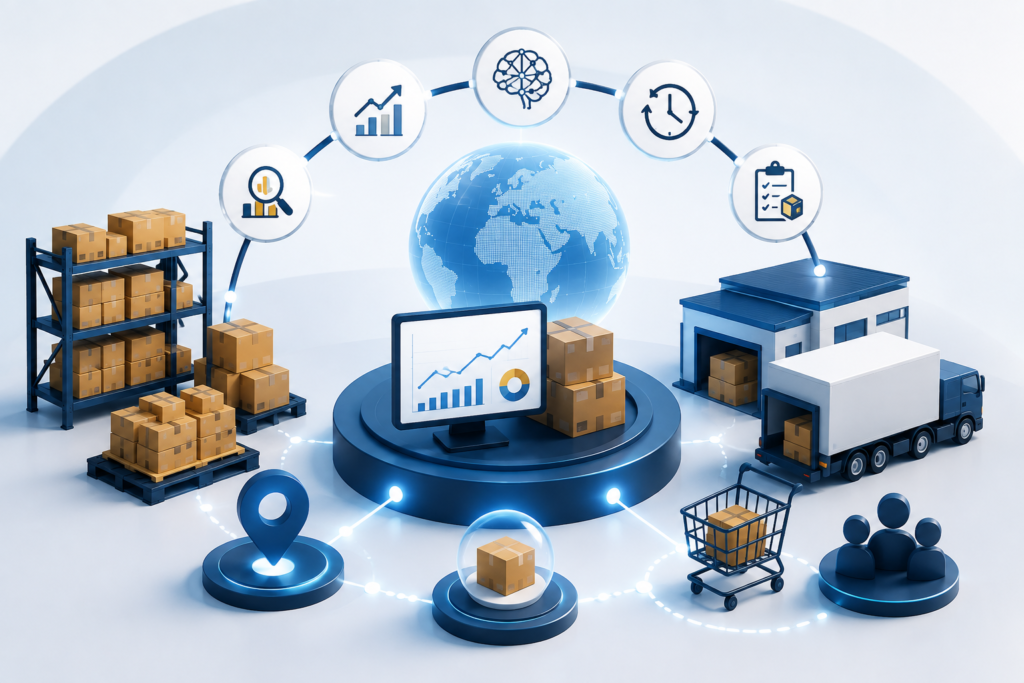
Greater emphasis on end-to-end supply chain visibility, connecting forecasting, supplier management, warehouse operations, and last-mile delivery into a single, genuinely unified system rather than a collection of separately optimized components, is becoming increasingly common among more sophisticated e-commerce operations, reflecting a recognition that isolated optimization of any single link in the chain delivers limited value if the surrounding links remain disconnected. And growing accessibility of genuinely capable predictive logistics tools for small and mid-sized businesses, rather than these capabilities remaining locked behind the kind of enterprise-level budgets only major retailers could historically afford, is gradually leveling the playing field, allowing smaller e-commerce businesses to compete on inventory availability in ways that simply weren’t realistically achievable even a few years ago.
Stop Reacting to Stockouts and Start Preventing Them
Here’s what my friend with the vanishing moisturizer eventually did after that painful six-week lesson: she implemented a genuine predictive logistics system, invested the time to clean up her historical sales data, and gave herself a full quarter to let the model calibrate to her specific business before expecting perfect results. Within two quarters, her stockout rate on top-selling products dropped dramatically, and, just as importantly, she got her time back, no longer spending hours each week manually eyeballing spreadsheets trying to guess what might run out next.
That’s really the core promise of predictive logistics AI and genuine supply chain automation: not replacing human judgment, but giving the people running your operations a system that actually sees problems coming instead of one that only reports them after the damage is already done. The businesses that thrive in e-commerce right now aren’t necessarily the ones with the biggest catalogs or the flashiest marketing. They’re increasingly the ones that simply never run out of what customers actually want to buy, and that reliability, quiet and unglamorous as it sounds, compounds into genuine competitive advantage over time.
If you take one action step from everything above, let it be this: pull up your stockout history from the past six months right now, identify your top revenue-generating products that experienced any availability gaps, and start there. You don’t need to overhaul your entire supply chain overnight. You need to stop reacting to the stockouts you can already see in your own data, and that’s a problem predictive logistics AI is genuinely built to solve.
FAQ: Common Questions About Predictive Logistics and Supply Chain Automation
1. What exactly is predictive logistics AI? Predictive logistics AI refers to software that analyzes historical sales data, seasonal patterns, and other relevant signals to forecast future demand and inventory needs, allowing businesses to reorder stock proactively before a shortage occurs rather than reacting after the fact.
2. How is supply chain automation different from basic inventory management software? Basic inventory management tracks current stock levels and alerts you when they drop below a threshold. Supply chain automation goes further, forecasting future demand, calculating optimal reorder timing based on supplier lead times, and often generating purchase recommendations or orders automatically.
3. How long does it take to see results after implementing predictive logistics AI? Most businesses see meaningful improvement within one to two quarters, since the forecasting model typically needs a calibration period to learn your specific business patterns before its predictions become highly accurate.
4. Is predictive logistics AI only useful for large e-commerce businesses? No, increasingly capable tools have become accessible to small and mid-sized businesses as well, though the specific platform and level of sophistication that makes sense often varies based on catalog size, order volume, and available budget.
5. What data do I need before implementing supply chain automation? Clean historical sales data, accurate current inventory records, and realistic supplier lead time information form the foundation. Businesses with messy or incomplete historical data generally need to invest in data cleanup before implementation for the best results.
6. Can predictive logistics AI account for planned promotions or marketing campaigns? Yes, though this information typically needs to be explicitly fed into the system, since a model working purely from historical sales patterns has no independent way of knowing about upcoming demand drivers unless that information is provided directly.
7. Does supply chain automation eliminate the need for human oversight entirely? No, most businesses benefit from maintaining meaningful human review, particularly during the initial implementation period, since even well-built forecasting models can produce questionable recommendations in unusual situations the underlying data hasn’t fully captured yet.
8. What’s the biggest mistake businesses make when adopting predictive logistics AI? Treating the system as fully autonomous too early, before it’s had time to calibrate to your specific business, or ignoring the importance of clean historical data going into implementation, are among the most common and costly mistakes.
9. How do I know if my predictive logistics implementation is actually working? Track stockout rate reduction, forecast accuracy against actual sales, inventory turnover, and carrying costs together, rather than focusing on any single metric in isolation, to get a genuinely complete picture of whether the system is delivering balanced value.
10. Does predictive logistics AI work the same way for businesses in the US and UK? The underlying principles apply similarly in both markets, though specific considerations like international shipping lead times, customs processing, and regional demand patterns may require adjustments depending on where your suppliers and customers are located.